

Sugary disguise

Killing cancer cells is tricky business, partly because they can be hard to find. Those tricky cells are good at hiding, but researchers are on to them. It seems their “invisibility cloak” is made up of a sugary coating that can now be detected.

The study, published in Science, shows that leukemia cells coat themselves in a slippery, sugar-coated protein called CD43. This shield makes it difficult for the body’s immune system to grab and destroy them.

When researchers removed the CD43, they found that immune cells were suddenly more adept at doing their job.

The sugar coating acts both as a barrier and a disguise — cancer cells are harder to reach, and the signals received by cells like macrophages, the body’s cleaning crew, says “don’t attack me.” This combination is what scientists are referring to as a glyco-immune barrier.

Notably, the barrier isn’t evading only one type of immune cell, it also interferes with natural killer cells and T cells, which are instrumental in fighting cancer.

The next step is for scientists is to figure out a way to strip away this sugary cloak at scale, which could make existing cancer treatments like immunotherapy more effective.

More like this: Cancer can run, but it can no longer hide
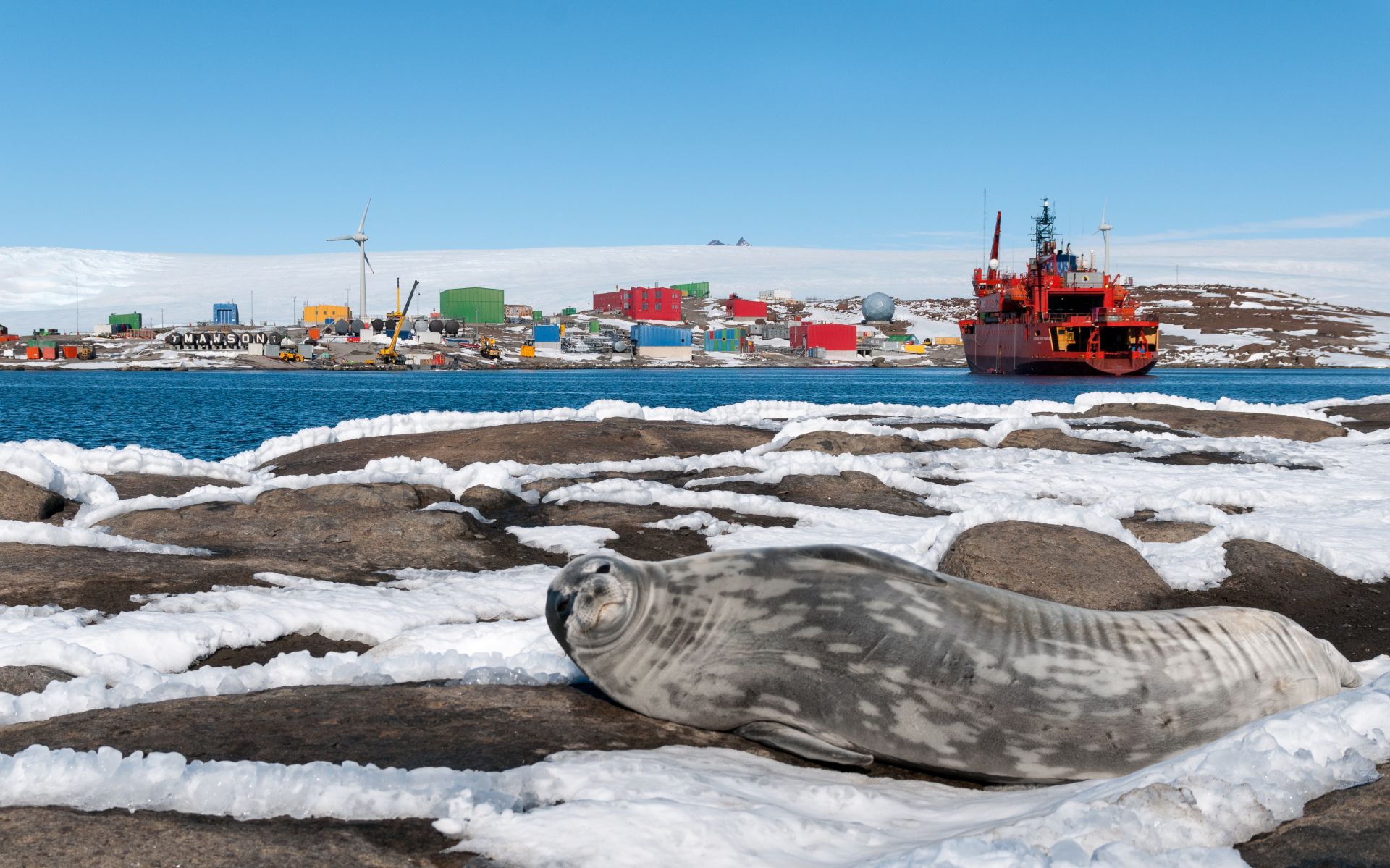
The immensity of intensity

Terms like “glacial” are often applied to regions like the Antarctic. Although that might create an image of slowly changing landscapes, sometimes it’s quite the opposite.

A recent study conducted by researchers from Khalifa University shows that snow can grow or shrink daily due to sudden weather shifts.

While studying the ice close to Mawson Station in East Antarctica, scientists discovered that although the seasonal patterns of growing and shrinking sea ice is predictable, the snow on top can change quickly.

These shifts aren’t caused by seasonal changes, but by sudden weather. Extreme snowfall, strong winds or gusts of warm air can add, shift or remove snow.

Most notably, these changes can be caused by atmospheric rivers, which are large streams of moisture in the air that can simultaneously drop snow and stir up strong winds that could blow much of the snow away.

Katabatic winds (fast-moving air speeding down from the Antarctic’s high interior) can also be responsible for removing snow from the surface or disappearing it into the air.

Why does this matter?

Snow and sea ice help regulate the Earth’s climate. Understanding that the Antarctic ice system is more akin to a volatile stock market than a slow drift can help scientists improve climate models and better understand what’s coming next as Antarctic ice continues to shift.

More like this: A river runs over it

Teamwork makes the dream work

A new study looked at how individual algae cells survive a full day of glaring sunlight. It showed that even though each cell behaves slightly differently, a group’s defense systems work as a team. This is a new way of seeing how living cells deal with stress.

The study, published in New Phytologist, details how researchers utilized glowing imaging techniques and machine learning to see what’s occurring inside Chlamydomonas reinhardtii — essentially a single-celled solar panel.

Rather than observing a whole bunch of cells at once, which averages everything out, checking one cell at a time showed that even genetically identical cells have different behaviors. It seems that some are better at handling bright light than their counterparts.

Within each cell, the sun-protection systems with two key defenses move in sync — like partners adapting together as the light intensifies. This is a new observation because typically scientists look at large groups of cells that suggest the protective systems are coordinated rather than independent.

This new approach could help researchers understand how all kinds of cells (not just algae) handle multiple stress responses.

More like this: Human cells are warming up to self-destruction

Secret climate weaponry

The muddy, coastal forests known as mangroves are turbo carbon-storage vaults, and recent research indicates that they also house black carbon — a remnant of fires that typically breaks down at a snail’s pace.

The carbon in the mangrove soils of the Zhangjiang Estuary in China was found to be made up of 17 percent burned carbon.

The deeper the soil, the more of this long-lasting carbon remains, showing its ability to hang round for a very long time.

A small portion is mobile, however, traveling out to sea which indicates that while mangroves store carbon, they also release it.

The plants are the key to all of this action as they help to trap more carbon that the soil conditions like texture and nitrogen contribute to its stability.

Ultimately, the research, published in Environmental and Biogeochemical Processes, indicates that mangroves may play a more vital role in climate protection than originally thought — vaulting carbon in the long term and its masked role in global carbon cycling.

More like this: Gift from the sea

Phone fatigue

If your phone gives you the weekly update about how naughty you’ve been having spent 2.2 more hours on it than last week, it may need an attitude adjustment. A new study says that it’s not about the volume of screen time that impacts you — it’s how you use that time.

New research from Aalto University tracking 277 people over the course of seven months (and 13 million clicks and taps) finds that those who are constantly checking their phones in quick succession, think scroll, stop and scroll again, feel far more overwhelmed.

“Session sparseness,” or stop-start behavior, is akin to being interrupted every 30 seconds while trying to read a book. Your brain never gets into a cadence or rhythm and begins to feel overloaded.

Also of note, the content of what you’re observing isn’t relevant, it’s the continuous alternating that has a negative impact.

Desktops aren’t the main culprit though, it’s our phones.

The research indicates that the solution to our brains feeling less cluttered might be fewer check-ins, rather than less overall screen time.

More like this: Feeling anxious? Social media might be to blame