Smooth operators

Solar power is a great source of green energy, but it can also be inconsistent.

When clouds pass over or the sunlight adjusts, solar-plant electricity outputs can move up and down like a volatile stock. This can make power-grid stability complicated.

A recent study from Khalifa University suggests that these volatilities can be tempered by allowing batteries and hydrogen storage to work together.

Batteries can manage and handle quick changes in power, while extra energy can be utilized to produce hydrogen. The hydrogen is then stored and later converted back into electricity with fuel cells.

This system’s control strategy constantly monitors battery charge, hydrogen levels and efficiency to determine how to share the workload in real time.

The simulations reveal that this method reduces battery degradation by approximately 50 percent while maintaining much smoother solar power flow to the grid.

More like this: Solar panel sunscreen

When songs go viral

You might think that music just hits the market and if the people like them, they go viral. But there’s a lot more at play here, and it’s not just the listeners who decide.

Music hits don’t just happen these days — the platforms where we listen to them are influential and play different roles in whether a song takes off.

A recent study comparing two years of top 100 charted music, from both Spotify and TikTok, reveals that the platforms reward different kinds of artists and kinds of music. Tracking over 1,700 Spotify hits and over 300 TikTok hits, they were able to diffuse how songs become famous.

On Spotify, major-label artists rule its charts, very much like the music industry. And songs about common themes like romance typically do well.

But TikTok is different. Its short video platform prefers catchy, danceable excerpts that patrons can repurpose in memes, trends or challenges. And when a song begins to head in the viral direction the algorithm pushes it harder. This means fewer songs dominate the charts, but those that do are around longer.

Notably, the study reveals that many viral TikTok songs began their popularity momentum on Spotify first. So, Spotify launches hits and TikTok makes a cultural moment out of it, exploding it across the internet.

These platforms are reshaping how today’s songs become hits.

More like this: How Cold Play take sustainability on tour

No. 2 might be priority No. 1

Artemis II has returned to Earth after a successful lunar flyby. Though astronauts have been to the moon before, Artemis II achieved many firsts.

One of these firsts is something most of us don’t consider when thinking about a mission to the moon, but it’s as simple as one, two, three — well one and two anyway. Yep, among other firsts, we’re talking about space toilets.

But let’s discuss the other Artemis II firsts first.

Only Americans had made the trip to and around the moon until Canadian Jeremy Hansen became the first non-American to make such a journey.

Hansen grew up on a farm in Ontario and wanted to be an astronaut since he was a kid. He’s come a long way from the treehouse he converted into a spaceship to mission specialist on Artemis II at age 50. Hansen represents the Canadian Space Agency, where he’s been since 2009.
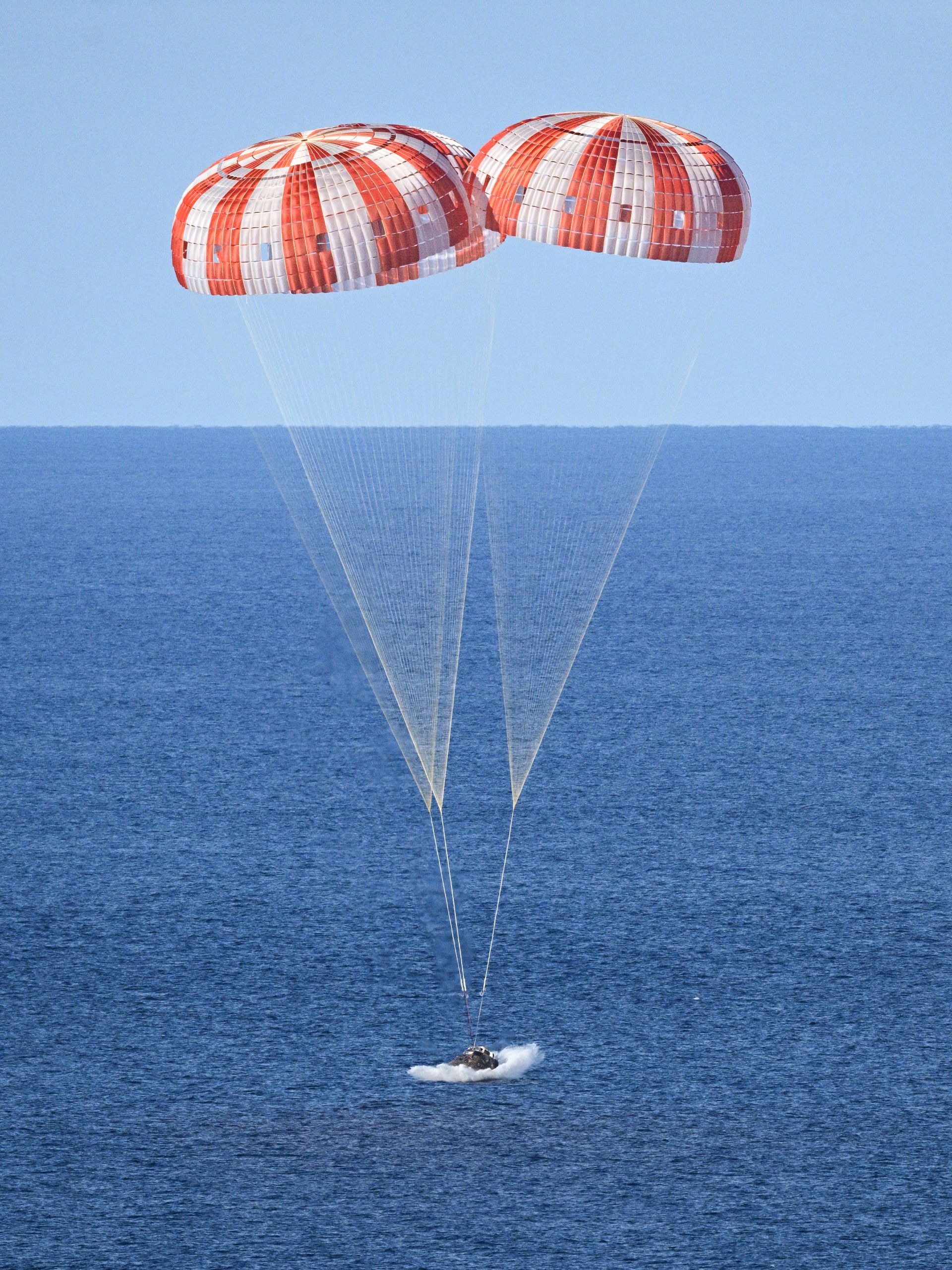
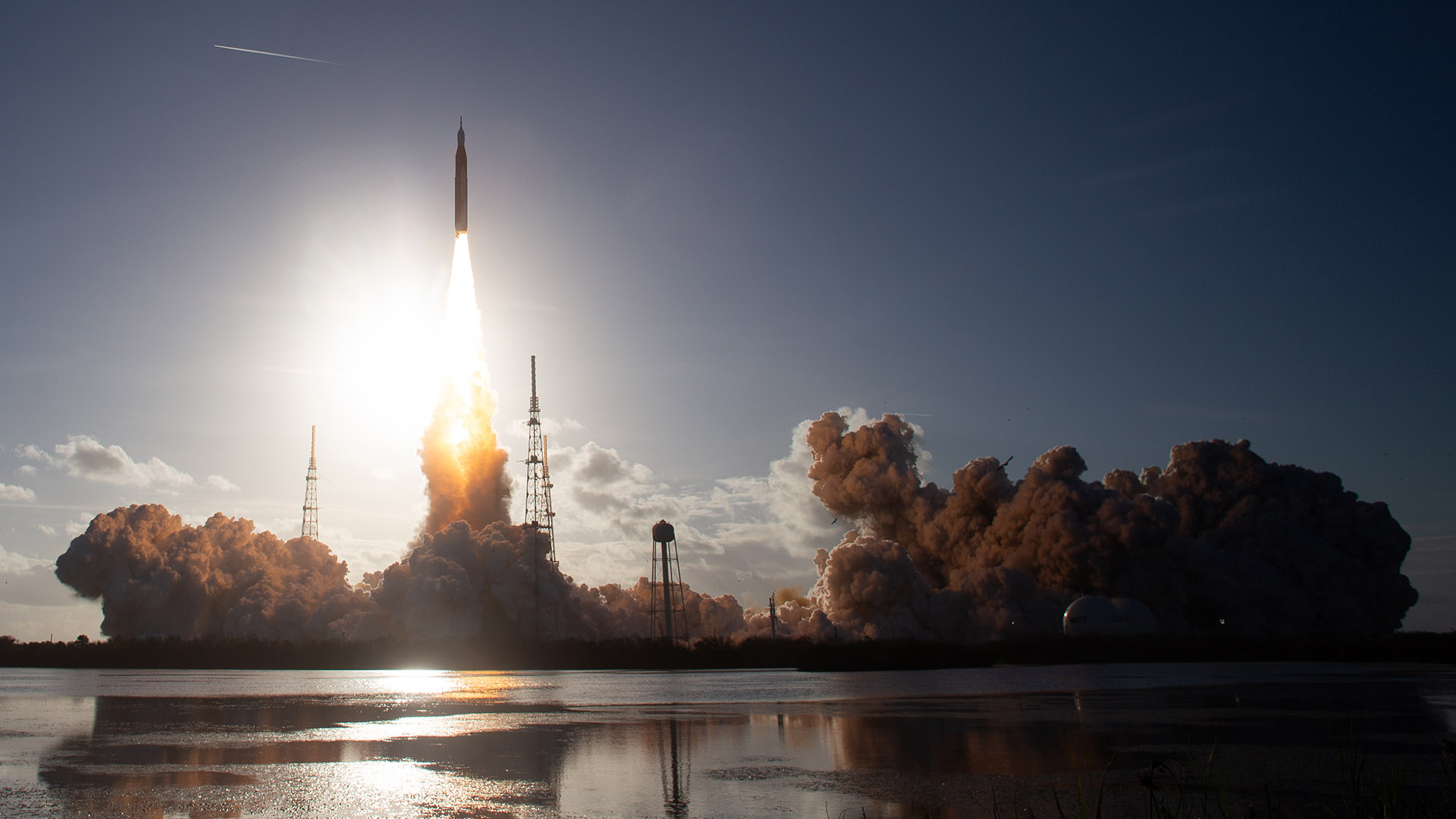
CAPTION: Orion splashdown IMAGE: NASA/Bill Ingalls

But Hansen’s isn’t the only first among the crew members. Christina Kocha, selected by NASA in 2013, has set a few records in her time as an astronaut.

In 2019 she participated in the first all-female space walk and broke the record for the longest spaceflight by a woman, serving 328 days as flight engineer aboard the International Space Station (ISS). Now she becomes the first woman to fly around the moon.

But wait, there’s more.

The Artemis II pilot, Victor Glover, is the first African-American to circle the moon. He holds three master’s degrees and spent time aboard the ISS.

We’ve discovered a lot about our crew, now let’s check out the hardware: the ship.

Analysis of the Orion vehicle that was part of the uncrewed Artemis I mission revealed over 100 spots where heat-shield material Avcoat had broken away. Gas built up inside the material and wasn’t able to escape. The resulting pressure caused damage.
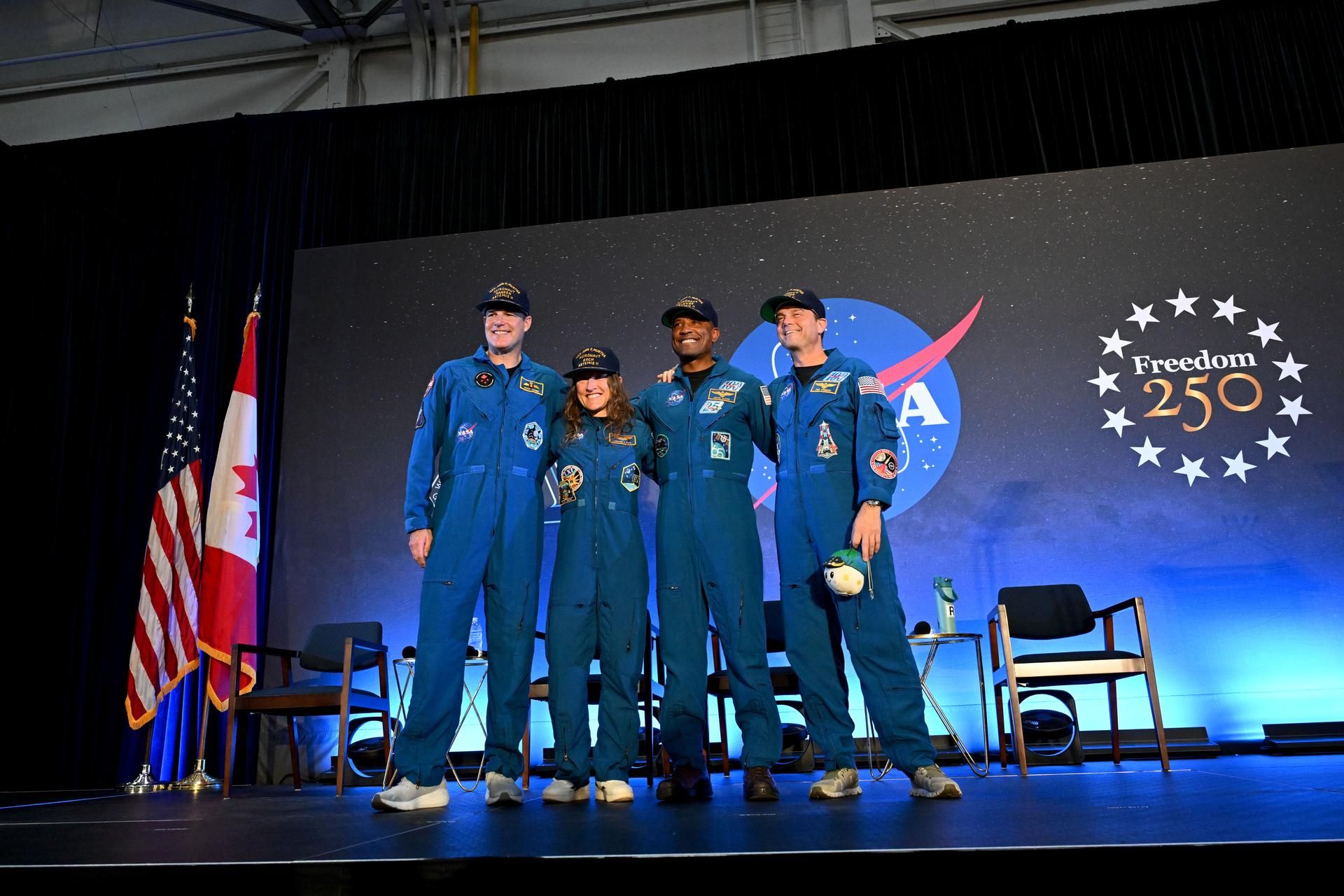
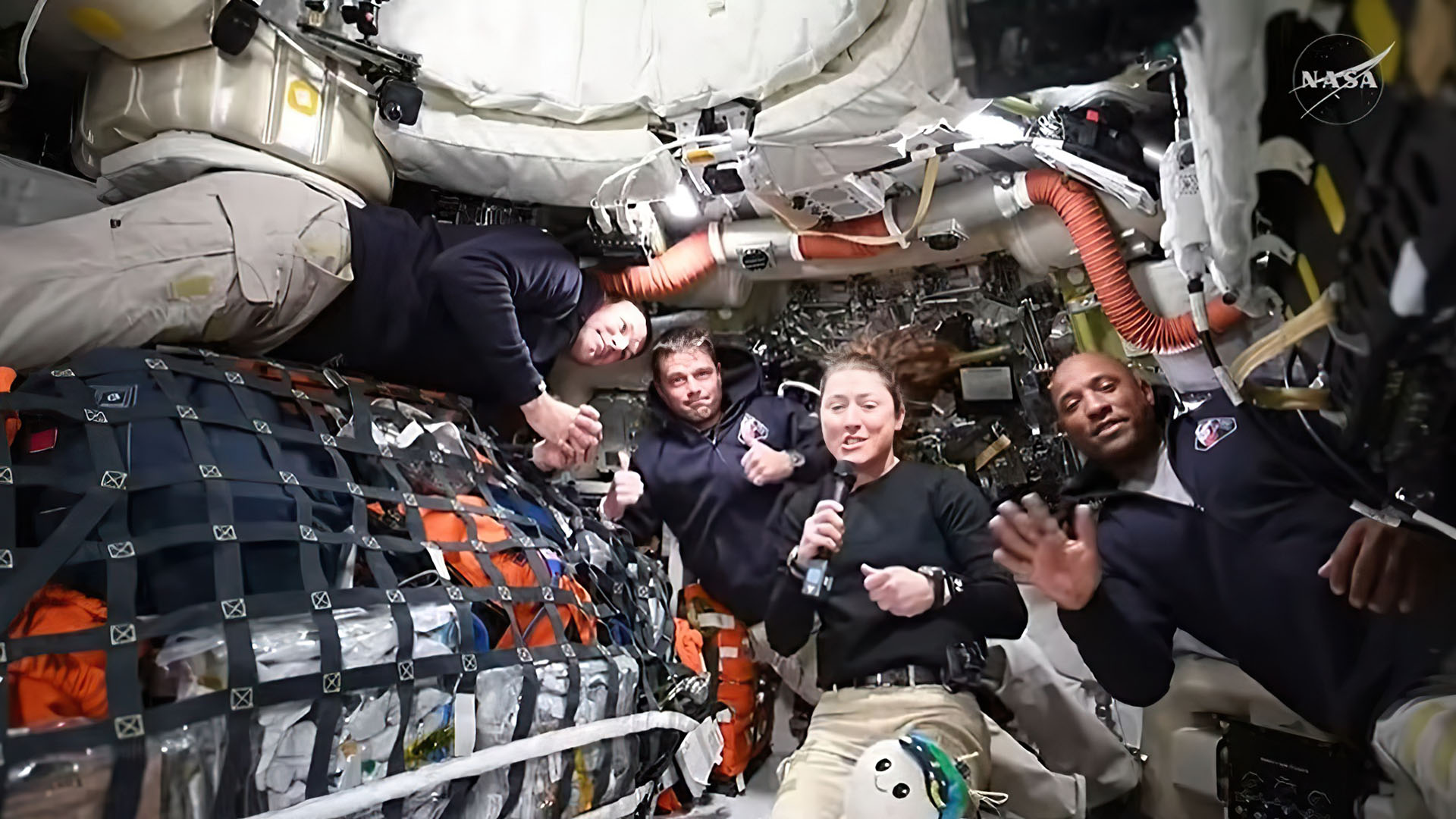
CAPTION: NASA astronauts Reid Wiseman, commander; Victor Glover, pilot; Christina Koch, mission specialist; and CSA (Canadian Space Agency) astronaut Jeremy Hansen, shared brief remarks with friends, family, and colleagues after they landed at Ellington Airport near NASA’s Johnson Space Center in Houston on Saturday, April 11, 2026, after a nearly 10-day journey around the Moon and back to Earth. IMAGE: NASA/Helen Arase Vargas

This needed to be rectified before sending up a crewed ship.

Rather than alter the material, the team altered the physics.

“NASA has modified the trajectory by shortening how far Orion can fly between when it enters Earth’s atmosphere and splashes down in the Pacific Ocean. This will limit how long Orion spends in the temperature range in which the Artemis 1 heat shield phenomenon occurred,” Orion public affairs official Kenna Pell told Space.com. She also said the temperature inside the capsule would still have been comfortable and safe had the ship been crewed.

Also tested on this mission are the essential life-support systems designed and constructed by Airbus, courtesy of the European Space Agency (ESA). The European Service Model (ESM) sustains the crew by providing air, drinking water, power and temperature regulation within Orion.

Once the Orion separates from the SLS rocket, the service module distributes four solar wings. The wings track the sun and convert its energy into electricity that powers the ship’s systems like computers, temperature control, navigation and communications. Batteries are also charged for when the sun is not accessible.

The mission itself expects to boast the fastest crewed Earth re-entry ever attempted at 25,000 mph. Having traveled 252,765 miles, Artemis II set the record for the farthest distance from Earth ever traveled by a human.

Now that we’ve covered all of the “easy” stuff, let’s get down to the complicated part of sending humans into space, including human bodily functions and how those work in microgravity.

Say hello to the Artemis II loo. Well a version of it.

CAPTION: This version of NASA’s Universal Waste Management System was sent to the International Space Station; a special lunar version will accompany the space agency’s Artemis astronauts onboard Orion spacecraft bound for the moon. IMAGE: NASA/JSC/James Blair

The crews of the Apollo had a different experience when they had to boldly go. But the space program has come a long way from plastic baggies and funnels.

The crew of the Artemis missions have the luxury of the Universal Waste Management System, or space toilet for short.

It can handle feces and urine simultaneously — a great “relief” to female astronauts. Unlike previous space toilets, this system takes their anatomy into consideration.

“The toilet has built on designs from Apollo, the space shuttle and even the International Space Station. … There is so much learning that goes into it,” says Melissa McKinley, project manager and principal investigator for NASA’s waste disposal and management systems.

The toilet cabin is loud to the point that the inhabitants require protective ear wear, but that’s not the only complication — once inside, you can’t determine which way is up and which is down.

This isn’t the best time to make directional errors. Previous missions on the Apollo resulted in escapees that had to be chased down by the crew. Not cool.

Who knew that one of the most imperative firsts of modern space missions and deep space exploration would be human waste management?

It seems the luxury of a coveted door on the loo is also a source of mission success.

More like this: To the moon, Artemis II!

To the moon, Artemis II!
After more than 50 years, NASA aims to return humans to the moon with the April 1 launch of the Artemis II mission.

The last mission to land astronauts on the moon took place in December 1972 and was about planting a flag on the moon. So, what’s the difference this time?

NASA has bigger plans.

The Artemis program started with the 2022 launch of Artemis I, an unmanned flight test of NASA’s latest deep-space exploration systems. These include the Orion capsule — the vehicle that will launch from the Space Launch System (SLS) and sustain the mission crew. The mission lasted 25 days.

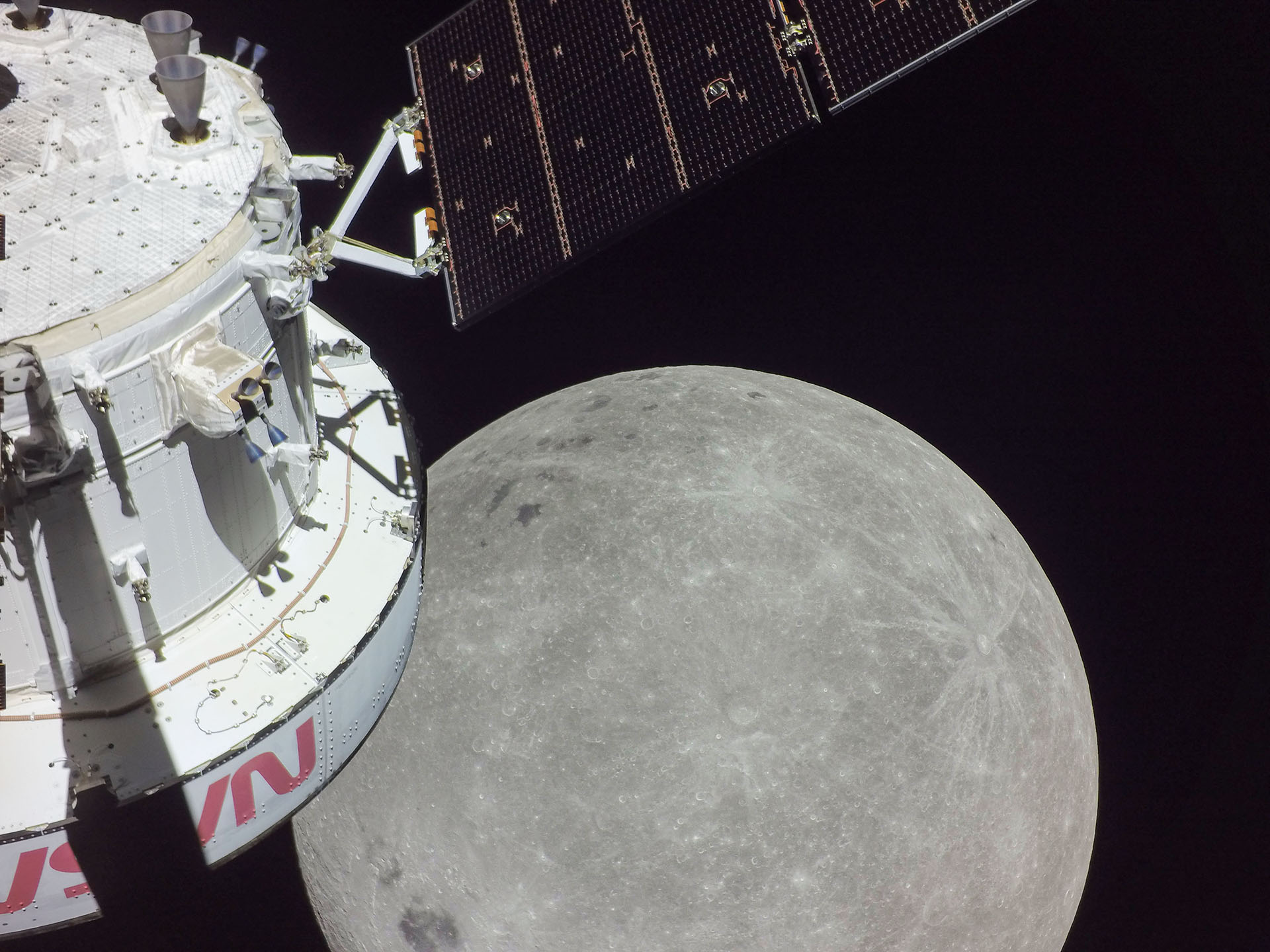
CAPTION: A portion of the far side of the moon looms large just beyond Orion in this image taken on the sixth day of the Artemis I mission by a camera on the tip of one of Orion’s solar array wings. IMAGE: NASA

Artemis II is the first manned part of the mission. A four-person crew – commander Reid Wiseman, pilot Victor Glover, mission specialist Christina Koch and mission specialist Jeremy Hansen – are on a 10-day trip that will circle the moon and return to Earth.

The Artemis II mission is critical because, according to NASA, it will “confirm the spacecraft’s systems operate as designed with crew aboard in the actual environment of deep space.”

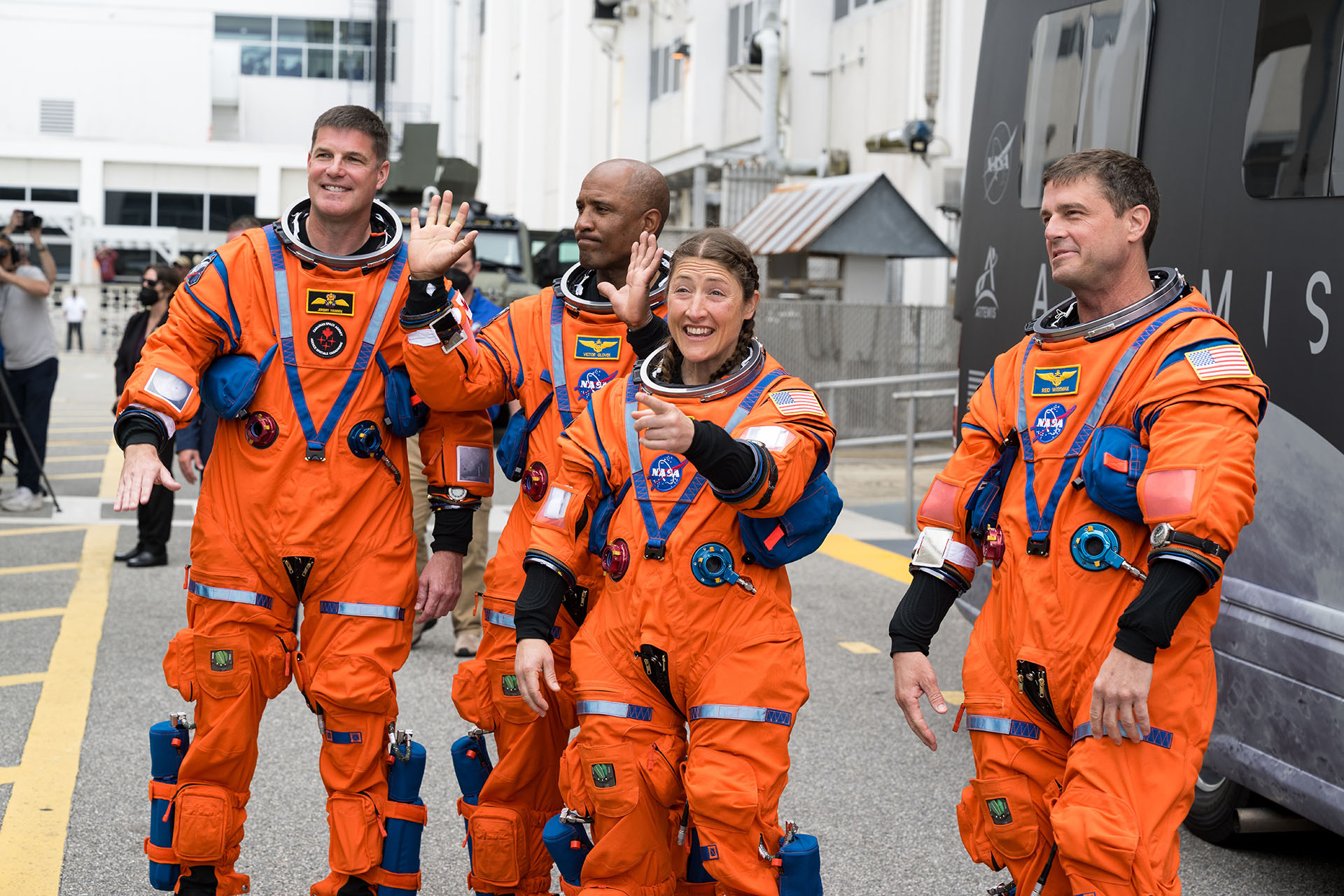
CAPTION: From right: NASA astronauts Reid Wiseman, commander; Christina Koch, mission specialist; Victor Glover, pilot; and Canadian Space Agency astronaut Jeremy Hansen, mission specialist, wave to family and friends. IMAGE: NASA

Tests for the Orion capsule team include: life-support environment; systems from ground to launch; flight and recovery; retrieval of flight hardware and data; emergency operations, including systems capabilities, abort operations and rescue processes; and finally verifying subsystems and validating data.

Artemis III is intended to test meeting and docking capabilities between the Orion capsule and commercial spacecraft from SpaceX, Blue Origin or both, required for landing boots on the moon. This mission will occur in low-Earth orbit.

The fourth Artemis mission is targeted for early 2028 and is expected to be the program’s first lunar landing. Once the craft is within lunar orbit, two astronauts will head down to the surface for a week of exploring close to the moon’s south pole.

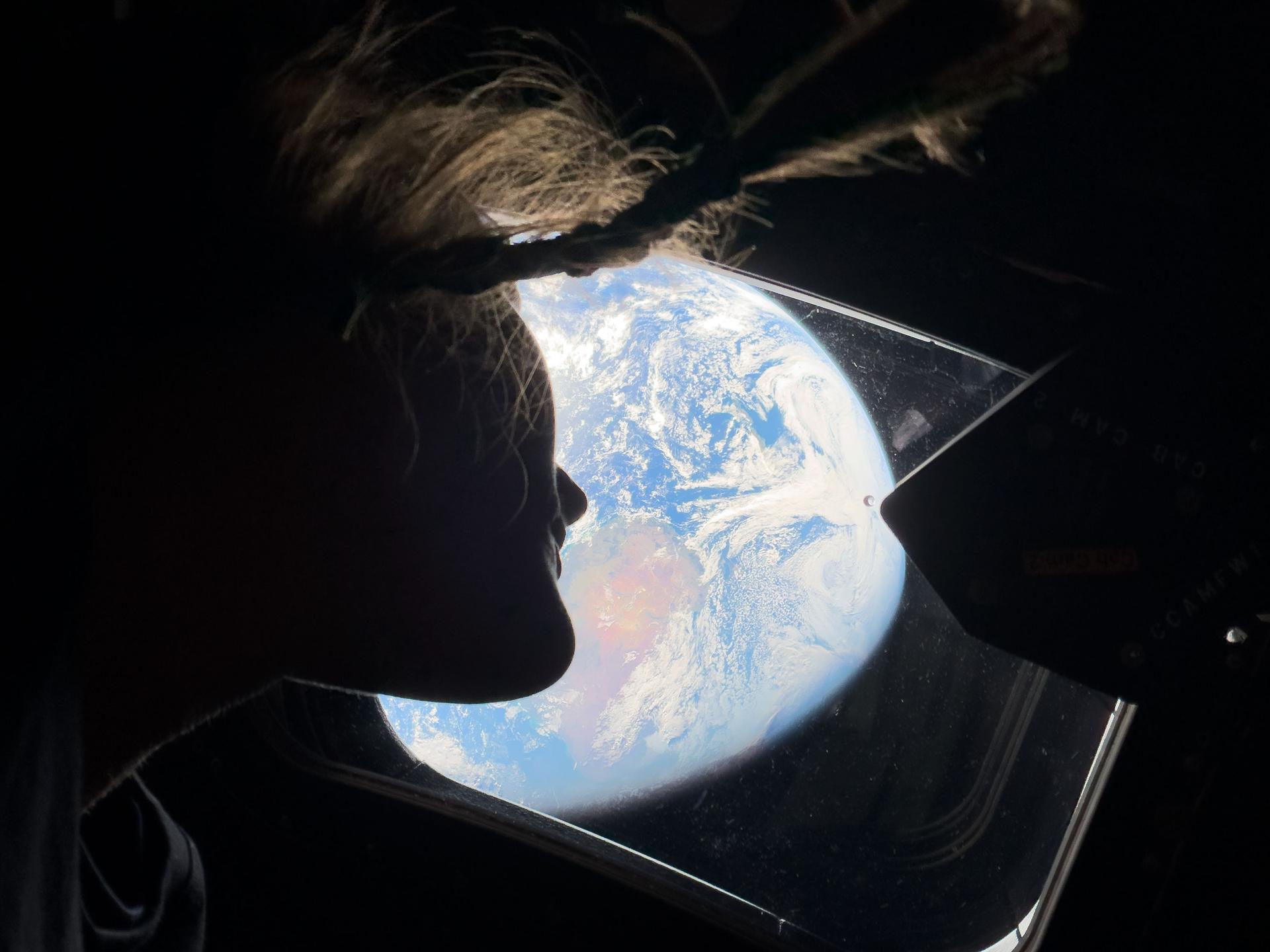
CAPTION: NASA IMAGE:  Christina Koch peers out of one of the Orion spacecraft’s main cabin windows, looking back at Earth, as the crew travels toward the moon.

Artemis V is set for late 2028, landing another two crew members on the moon to begin constructing a lunar base for longer-term science missions.
After this final journey, missions are intended to occur approximately once a year.

The established lunar base will serve as a steppingstone for deeper space exploration, ultimately intent on sending crews to Mars.

Though this is an American mission, remember NASA’s motto: “For the benefit of all.” Space exploration has the unique ability to bring nations together, as countries collaborate in the shared pursuit of discovery, innovation and an enhanced comprehension of our place in the universe.

CAPTION: Artemis II crew members Jeremy Hansen, Reid Wiseman, Christina Koch and Victor Glover answer questions from reporters during the first downlink event of their mission. IMAGE: NASA

From onboard the Orion capsule, looking back at the Earth, mission pilot Glover says, “Trust us, you look amazing, you look beautiful, and from up here you look like one thing. Homo sapiens are all of us; no matter where you’re from or what you look like, we’re all one people.”

After traveling a record-breaking 252,760 miles from Earth (within 4,006 miles from the moon’s surface), the Artemis II crew is expected to splash down April 10 in the Pacific Ocean, likely off the California coast near San Diego.

More like this: Mining the moon

Send it back

Eugenia Kargbo is Freetown’s “chief heat officer,” an unusual title for a government employee.

Freetown, capital city of Sierra Leone, has always been hot, but it’s getting hotter. Climate change is making the mercury rise, and the urban heat island effect exacerbates the problem: On average, cities are 5 to 9 degrees hotter than rural areas. Kargbo says the data shows everywhere in Freetown is getting hotter, but some communities stay hotter throughout the day.

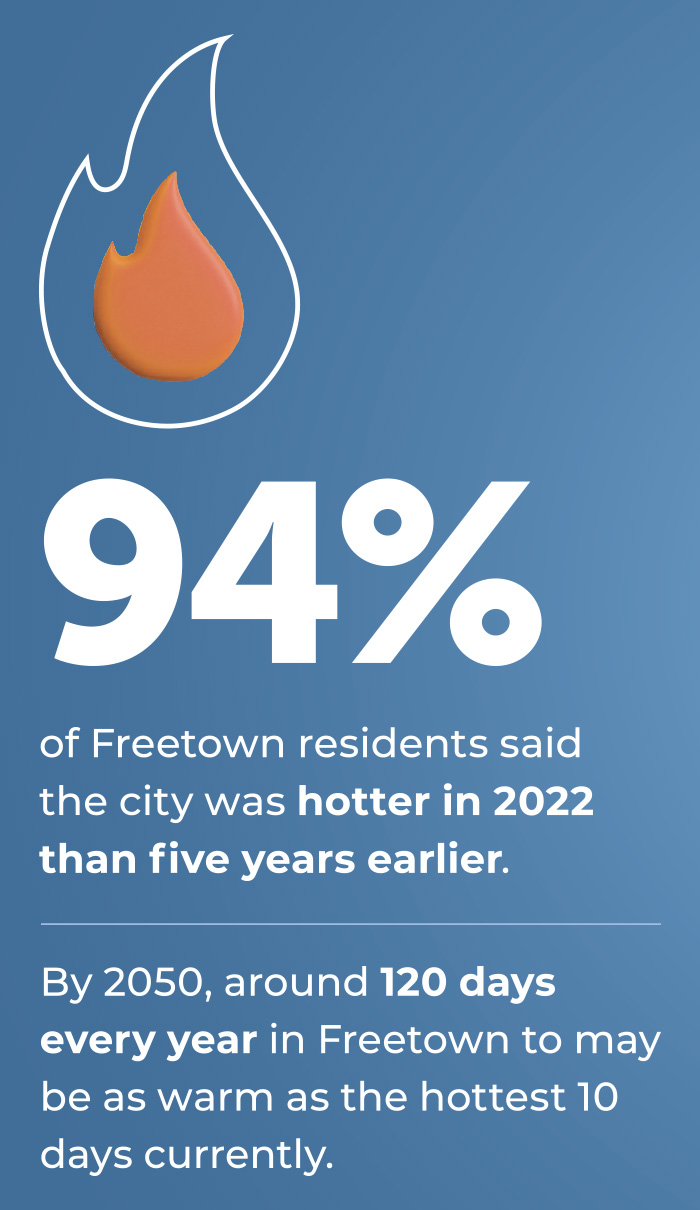
Freetown’s Climate Action Strategy reported 94 percent of residents said the city was hotter in 2022 than five years earlier. They’re not wrong.

Sierra Leone is the 18th most climate-vulnerable country in the world, according to the Notre Dame Global Adaptation Index. And Adrienne Arsht-Rockefeller Foundation Resilience Center data says by 2050, around 120 days every year in Freetown will be as warm as the hottest 10 days currently.

Kargbo had experimented with planting trees throughout the city and installing shading structures made of reflective plastic, but the real improvement was felt when a team of researchers approached her with an ambitious plan: Cover roofs with mirrors to reflect the sun.

Mirrors for Earth’s Energy Rebalancing (MEER) was founded by Harvard University’s Ye Tao. His theory? Develop “nontoxic surface-based reflectors that can redirect solar radiation back into space.

This isn’t actually so crazy. We know that ice- and snow-covered areas offer the albedo effect, where light-colored surfaces return a large part of the sun’s UV rays back to the atmosphere.

It’s why skiers and pole-trekkers need sunglasses and sunscreen. The planet has a natural “surface-based reflector” mechanism in snow and ice.

But with climate change come increased global temperatures and a dramatic loss of sea ice at the poles, snow in the mountains and glaciers in the north. Darker surfaces absorb a larger fraction of the incoming solar radiation, creating a vicious cycle.

MEER’s project aimed to cover buildings in Freetown with a reflective film made out of recycled PET plastic and aluminum. They started small: Two buildings got the film, another one was painted white and a fourth had a new metal roof installed. The two mirrored buildings were 15 degrees cooler than the surrounding buildings without the film, while the white-roofed building experienced a 3 degree cooling effect. MEER says if the entire neighborhood were covered, the cooling effects would be even greater.

Researchers at the University of Maryland are taking a similar approach. They developed a reflective coating using glass and aluminum oxide particles that can be painted onto roofs and roads.

The team’s “cooling glass” is environmentally stable — able to withstand up to 1,000 degrees — and uses finely ground glass particles to recycle and avoid polymers.

The particle size maximizes infrared emissions and reflects sunlight through the atmosphere back into space. The glass paint also comes in four colors.

George Ban-Weiss, an environmental engineer at the University of Southern California, says it’s simple to paint roofs white or light gray to increase the albedo effect — in theory. In reality, if this happens at a large enough scale, Ban-Weiss says it could have an unintended regional side effect.

In coastal cities, for example, the urban warmth contrasting with the ocean drives a reliable sea breeze. Bring the temperatures closer to each other, and there could be less of this wind, which would mean less clean air and a reduced natural cooling effect.

Not just where roofs are but their shapes matter too. Covering flat roofs would project the rays straight back to space, but slanted roofs could shine on the ground or the city’s inhabitants, heating them instead of the buildings.

One skyscraper in London is notorious for this. 20 Fenchurch St. is covered in glass — normal glass, not cooling glass — and its shape concentrates and reflects the sun’s rays into a beam of light that hits the pavement and makes it hot enough to fry an egg.

“It’s kind of a tug of war,” Ban-Weiss says. “You’ve got a reduction in air temperature to make people more comfortable.” But at the same time, he adds, sunlight reflecting off the side of a building could make pedestrians less comfortable.

Portland State University’s Vivek Shandas studied the heat island effect in over 100 U.S. cities. He says thinking about heat reduction is still very novel in urban planning: “When we’re talking about a place that’s designed in a particular way, how has the climate system been brought into the design of that place? How has the infrastructure been brought into its ability to mediate or moderate the amplifying temperatures? These are the kinds of questions I think we’re really up against here.”

More like this: Solar Impact